
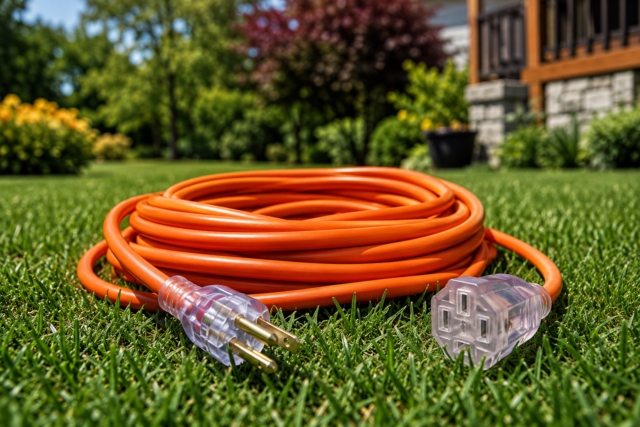
If you have ever grabbed the nearest extension cord and plugged in a power tool or appliance without thinking twice you are not alone. Most people do it every day. But using the wrong extension cord gauge can trip your breaker damage your equipment or even start a fire. As a Certified Electronics Technician with over 15 years working with electrical systems I want to break this down in plain language so you actually understand what you are buying and why it matters.
What Does Gauge Actually Mean
Gauge refers to the thickness of the wire inside the extension cord. Here is the part that confuses most people: the lower the gauge number the thicker the wire. So a 10 gauge extension cord has thicker wire than a 12 gauge extension cord and a 12 gauge has thicker wire than a 16 gauge.
Thicker wire handles more current. Thin wire on a heavy load gets hot and that heat is where the danger starts.
Think of it like a garden hose. A wider hose moves more water easily. A narrow hose trying to push the same amount of water builds pressure and struggles. Extension cord gauge works the same way with electricity.
The Gauge Chart You Actually Need
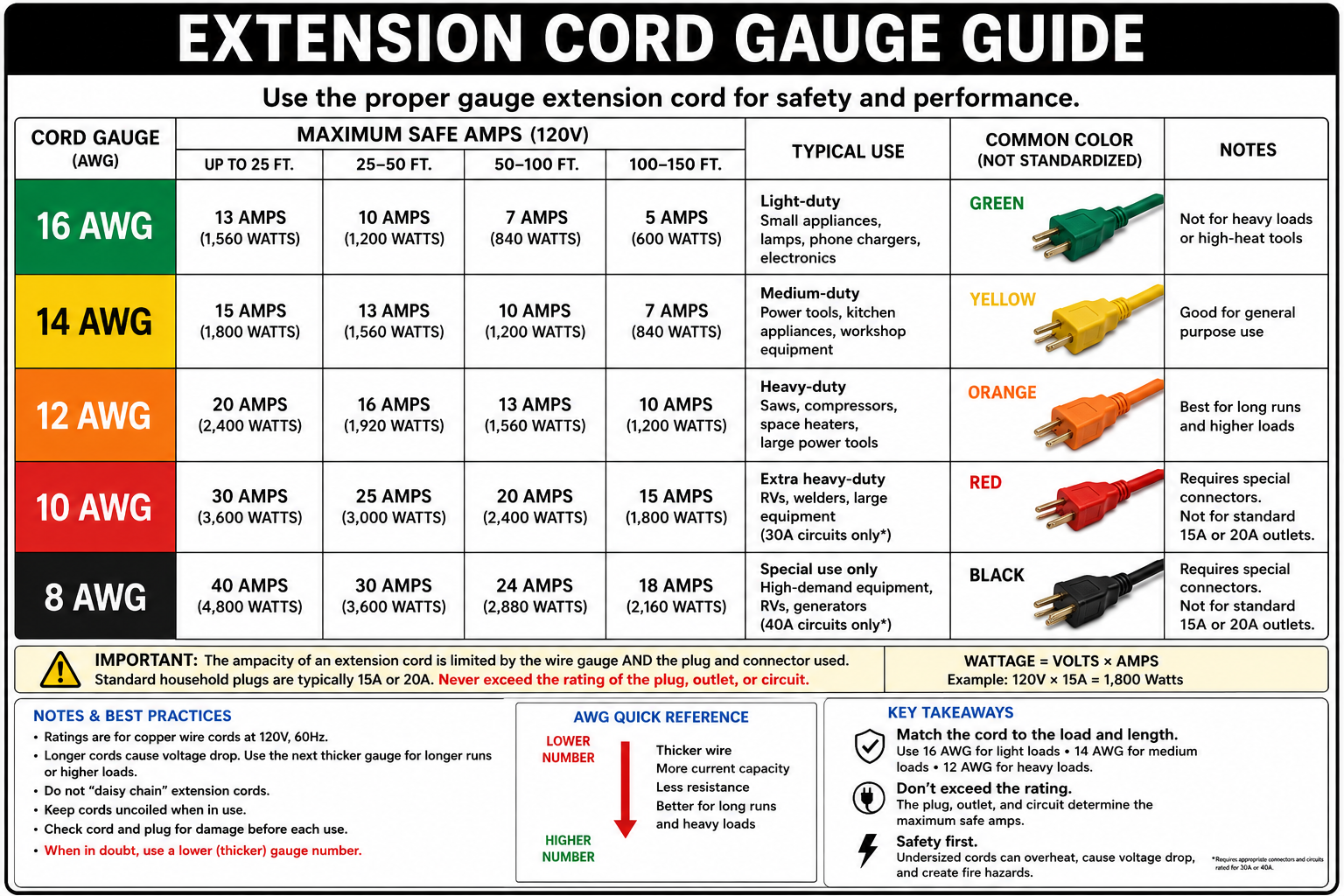
Here is a simple breakdown based on cord length and amperage:
16 gauge — up to 13 amps — light duty indoor use — lamps and phone chargers
14 gauge — up to 15 amps — medium duty — fans and small appliances
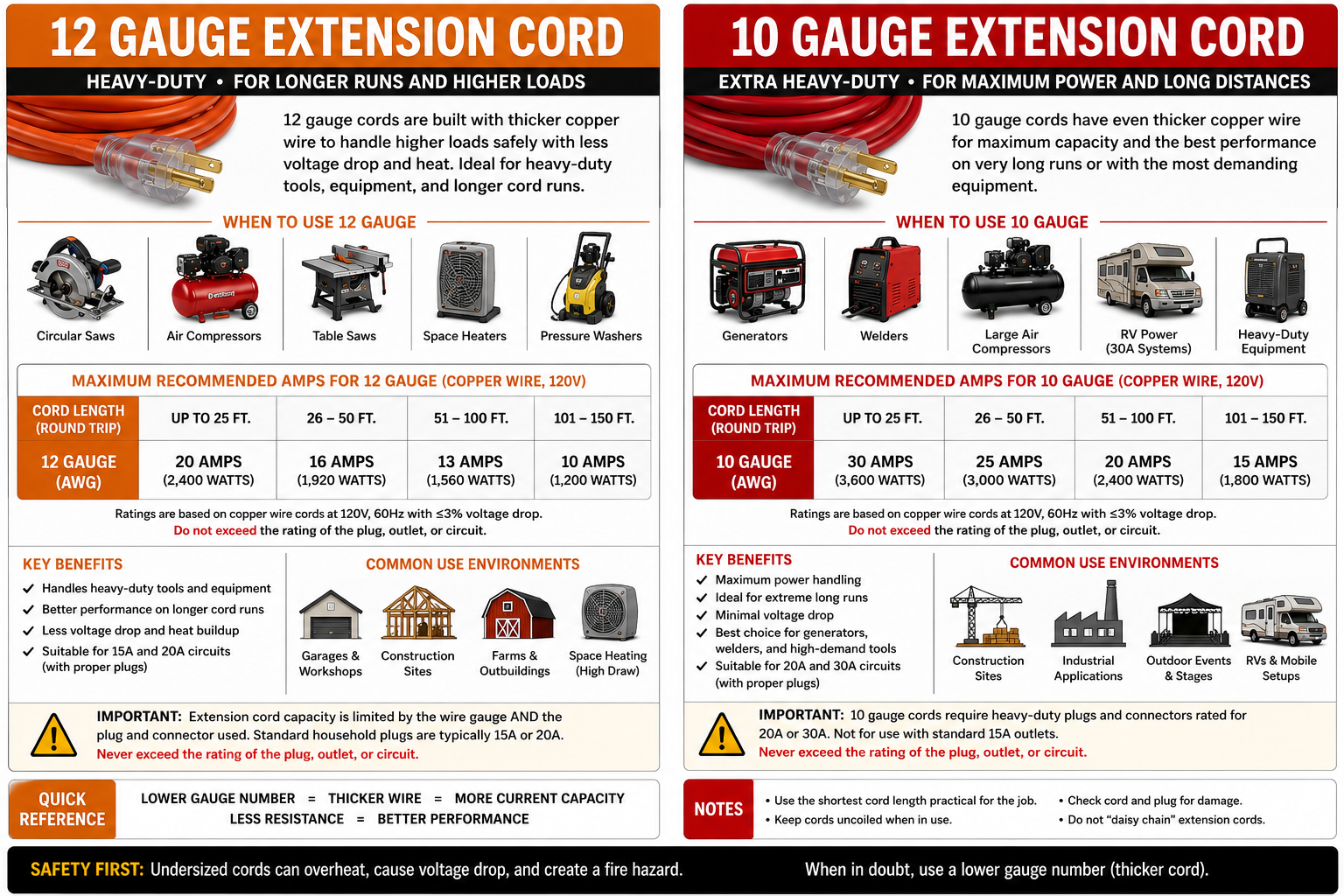
12 gauge extension cord — up to 20 amps — heavy duty — power tools and workshop equipment
10 gauge extension cord — up to 30 amps — extra heavy duty — air compressors and large outdoor equipment
The longer the cord the more resistance it creates. A 12 gauge extension cord at 25 feet handles a load that a 14 gauge at 100 feet cannot. Distance matters just as much as gauge.
When to Use a 12 Gauge Extension Cord
A 12 gauge extension cord is the sweet spot for most homeowners and DIYers. It handles the majority of power tools including circular saws drills sanders and jigsaws without breaking a sweat.
If you are doing weekend projects in the garage or running power to an outdoor work area a 12 gauge extension cord rated at 20 amps is the one to keep on your shelf. Get one that is at least 25 feet so you have flexibility to move around without daisy chaining two cords together.
Daisy chaining is exactly what it sounds like — plugging one extension cord into another. Do not do it. Every connection point adds resistance and drops voltage. Your tools end up working harder and running hotter than they should.
When You Need a 10 Gauge Extension Cord
A 10 gauge extension cord is for serious loads. If you are running an air compressor a large table saw or any equipment pulling close to 30 amps this is what you need.
Most homeowners will rarely need a 10 gauge extension cord for everyday use but if you are doing heavy shop work or running equipment with a dedicated motor it is worth having one. The cord will be heavier and stiffer than a standard cord but that thickness is exactly what protects the wire from overheating under load.
One thing I see people get wrong all the time is using a long light gauge cord with an air compressor. The voltage drop across a thin wire causes the compressor motor to work harder than it was designed to. Over time that shortens the motor life significantly.
Outdoor vs Indoor Use
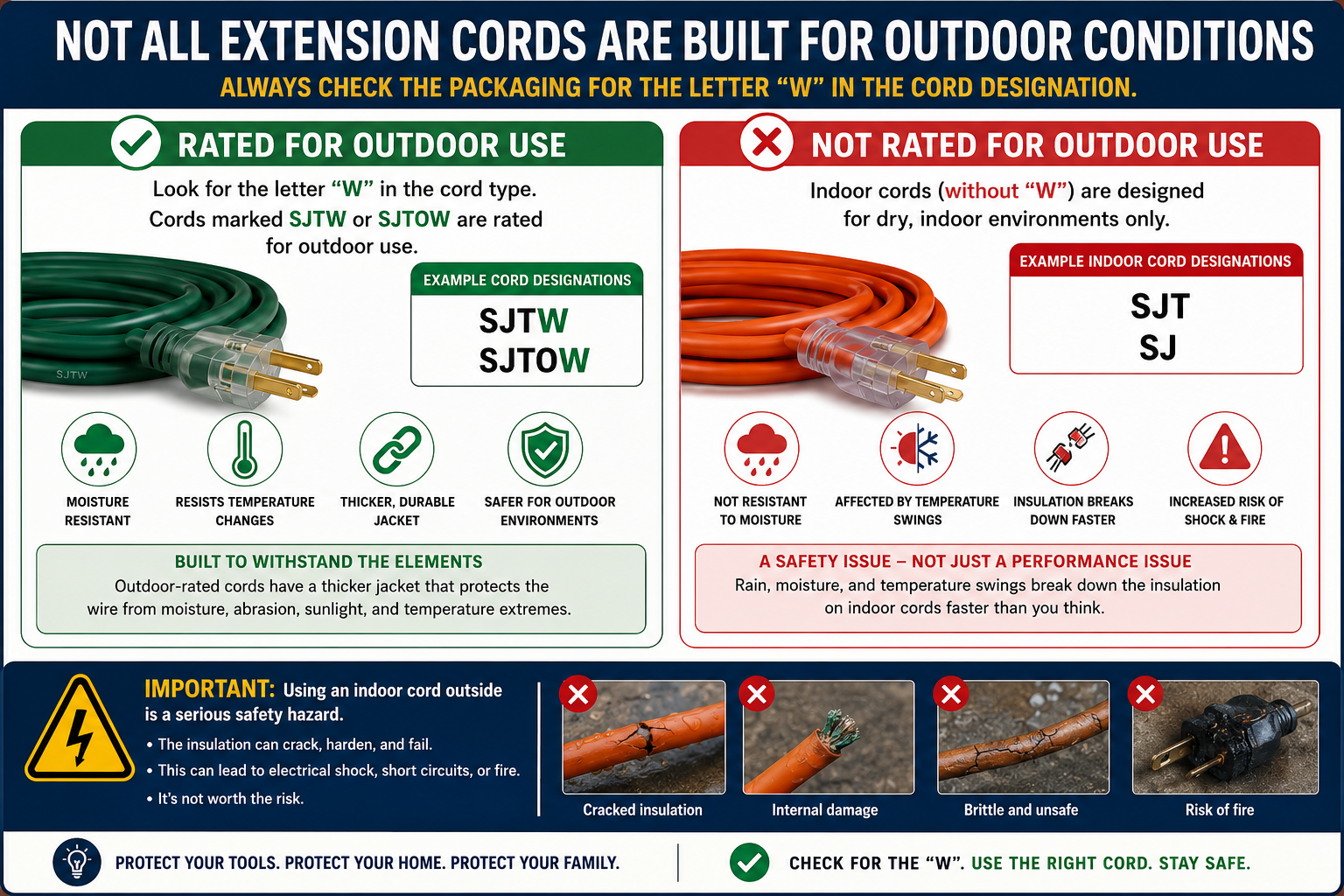
Not all extension cords are built for outdoor conditions. Always check the packaging for the letter W in the cord designation. A cord marked SJTW or SJTOW is rated for outdoor use. The jacket is thicker and resistant to moisture and temperature changes.
Using an indoor cord outside is a safety issue not just a performance one. Rain moisture and temperature swings break down the insulation on indoor cords faster than you think.
Quick Checklist Before You Buy
Ask yourself these questions before picking up an extension cord:
What is the amperage draw of my tool or appliance? Check the label or manual.
How far do I need to run the cord? Longer runs need heavier gauge.
Is this for indoor or outdoor use? Get a W-rated cord for outside.
Will I be using it with one tool or multiple things plugged into a power strip? Account for the total load.
Final Word
Extension cord gauge is one of those things that seems like a small detail until something goes wrong. A 12 gauge extension cord handles most DIY and home use situations and a 10 gauge extension cord covers the heavy equipment end of things. Match the gauge to the load and the length and you will never have to worry about a hot cord or a tripped breaker again.
When in doubt go heavier. A thicker cord than you need is never a problem. A thinner one absolutely can be.